Reliability's Hidden Receipt: How Capacity Auctions Shape the 2026 Bill You Haven't Seen Yet
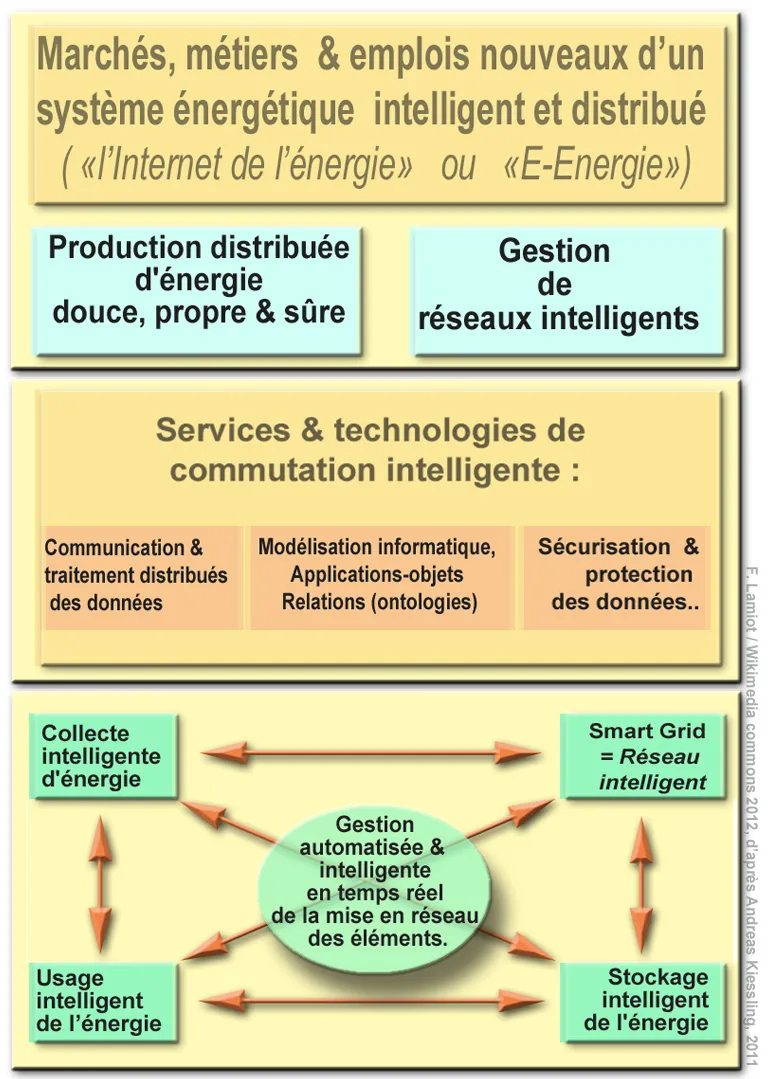
Photo: Lamiot, CC BY-SA 3.0, via Wikimedia Commons
Most electricity shoppers know the drill: compare supply rates, read the contract, watch for the expiration date. But a second, less visible market runs alongside that retail choice machinery, and its results can outlast any single supply contract. Capacity markets pay generators to be available when the grid needs them. The auctions that set those payments do not sell kilowatt-hours. They sell reliability, and the bill for that reliability eventually arrives at the meter.
What a Capacity Auction Actually Buys
In regions such as PJM, ISO New England, and much of MISO, capacity auctions are the mechanism grid operators use to secure enough generation, demand response, and efficiency resources to meet projected peak demand plus a reserve margin. A generator that clears the auction receives a capacity payment regardless of how much electricity it sells later. That payment is meant to keep the plant viable, or at least available, for a delivery year that may be several years away.
The auction is not a simple spot purchase. It is a forward commitment. When a capacity auction clears, it establishes a price per megawatt-day of unforced capacity for a specific delivery period. That price reflects the intersection of supply offers and the demand curve set by the grid operator. In recent cycles, tighter reserve margins, plant retirements, and load growth from data centers and electrification have pushed several U.S. capacity markets into higher-clearing territory than they saw in the 2010s.
For energy professionals, the auction result is a signal about scarcity and investment. For consumers, it is a cost input that rarely appears under that name.
How the Clearing Price Travels to Your Bill
Capacity costs do not vanish after the auction. They are allocated through a settlement process that ultimately reaches load-serving entities—utilities, retail suppliers, and cooperatives—and then, in most cases, the customers they serve. The exact path depends on the market design and state rules. In some jurisdictions, capacity costs are embedded in default service rates. In others, they are passed through as a separate line item or folded into a retail supplier's offer.
The allocation is not uniform. Load-serving entities are typically assigned capacity obligations based on their forecast peak contributions, and those obligations can be adjusted for locational constraints or resource adequacy rules. A utility serving a growing suburban territory may see its capacity obligation rise before its actual sales do. A competitive retailer may face capacity charges that vary by customer class. The result is a cost stream that is real, recurring, and often poorly understood by the households that ultimately fund it.
That opacity is not accidental. Capacity markets were designed by engineers and economists to solve a technical problem: ensuring enough dispatchable resources exist to keep the lights on. The cost-allocation rules were built to be administratively workable, not necessarily transparent to a residential customer scanning a bill insert.
The 2026 Auction Cycle and the Rate Cases It Will Touch
The auctions that set capacity prices for the 2026–2027 delivery year have already cleared in several major U.S. markets. Their outcomes are now moving through the regulatory system. Utilities in capacity-market states are incorporating those results into default service rate filings, and competitive suppliers are adjusting offers that will be marketed to households and small businesses over the coming months.
This is the lag that makes capacity markets so easy to miss. A rate case filed in late 2026 may rely on auction results finalized more than a year earlier. The proceeding will include testimony on capacity cost allocation, forecast peak demand, and the treatment of demand response and energy efficiency resources. Intervenors may challenge assumptions about how much capacity a utility actually needs or how costs should be shared among customer classes. But the auction itself is rarely reopened.
For consumers, the practical consequence is that a bill change attributed to "supply costs" in 2026 may have its roots in a capacity auction that few people outside the industry followed. For policymakers, the question is whether the current allocation methods send clear enough price signals to customers who could, in theory, respond by shifting load or investing in efficiency.
Why the Line Item Is Hard to See—and Harder to Challenge
Capacity costs are difficult to contest because they are not a single, uniform charge. They are spread across settlement systems, embedded in rates, and recovered through mechanisms that vary by state and utility. A customer who wants to understand the capacity component of a bill may need to trace it through a default service filing, a retail supplier's cost stack, and a regional transmission organization's tariff. That is not a reasonable expectation for a household, and it is a heavy lift even for many commercial energy managers.
The result is a quiet form of cost recovery. Capacity auctions are essential to grid reliability, but their financial outcomes arrive at the meter with little of the visibility that accompanies a change in the energy supply rate. As the 2026 auction results continue to work through rate filings and supplier offers, the most useful thing a consumer can do is ask a simple question: what portion of this rate reflects capacity, and how was it calculated? The answer will not be on the bill, but it is increasingly central to what the bill costs.