Where the Money Actually Goes: Inside the Quiet Economics of Poles, Wires, and Transformers
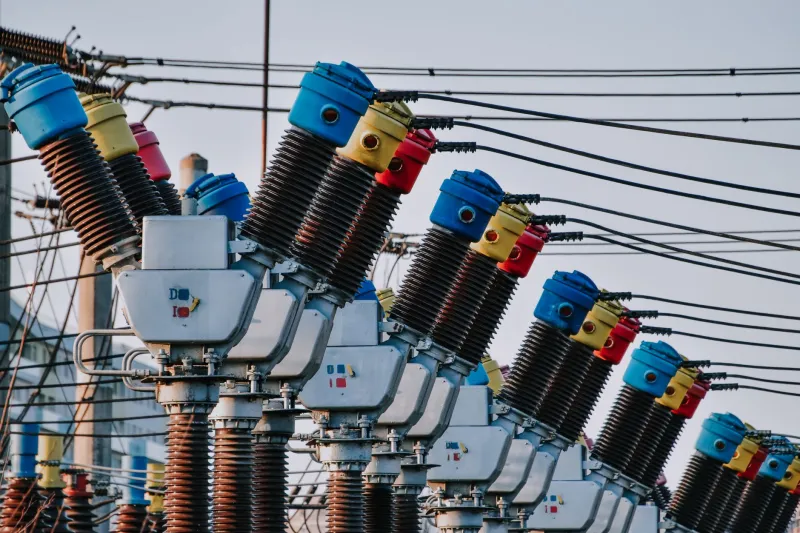
Ask a neighbor what drives up their electric bill and you'll hear about natural gas prices, data centers, or the cost of solar panels. Almost nobody mentions the wooden pole at the end of their driveway. Yet across the United States, the wires, transformers, and substations that make up the distribution grid now command the single largest slice of utility capital spending — and the gap between what consumers notice and where the money actually flows keeps widening.
The Inverted Attention Economy of the Grid
Generation is glamorous. Every new gas plant, wind farm, or battery installation draws press releases, protest hearings, and headline coverage. Distribution, by contrast, is invisible until it fails. That asymmetry shapes policy: regulators, legislators, and journalists devote disproportionate scrutiny to the front of the grid while the last mile — the segment that physically touches every customer — absorbs investment with comparatively little debate.
The numbers bear this out. Industry analysts estimate that distribution now accounts for roughly 40 percent or more of total investor-owned utility capital expenditure, outpacing generation in many service territories. Edison Electric Institute filings show investor-owned utilities collectively spending well over $150 billion annually across all categories, with wires consistently at or near the top.
How a Wires Charge Lands on Your Bill
Most residential customers see the results on line items labeled "delivery," "distribution," or "transmission." These charges are set by state public utility commissions through rate cases — formal proceedings where a utility presents its capital plan, regulators decide what portion of that spending is "prudent," and a allowed return on equity is applied to the approved investment base.
The mechanics matter. Unlike competitive generation markets in deregulated states such as Texas or Pennsylvania, distribution remains a regulated monopoly everywhere. There is no shopping for wires. Whatever your utility spends — subject to commission approval — flows through to ratepayers over decades of depreciation. A transformer installed this year may still be recovering costs on bills in 2065.
Wildfire and Storm Hardening Reshape the Budget
Two forces are inflating distribution spending faster than historical trends. The first is climate-driven risk. In California, utilities have committed tens of billions to undergrounding and covered conductor programs following catastrophic fires, including PG&E's multi-year undergrounding initiative. In the Gulf Coast and Southeast, hurricane hardening — stronger poles, elevated substations, flood-proofed equipment — has become a standing line item rather than a post-storm scramble.
The second force is load growth itself. Electrification of vehicles and heating, plus data center interconnections, requires transformers and feeder upgrades in neighborhoods that were designed for far smaller demands. Distribution planners who once sized equipment for a modest residential load now confront requests that can multiply a feeder's capacity needs overnight.
What Ratepayers Should Watch
The distribution grid is becoming the new battleground for cost recovery, and consumers have legitimate stakes in how it unfolds:
- Rate base growth. Because utilities earn a return on approved capital, aggressive infrastructure plans translate directly into higher delivery charges. Scrutiny of whether spending is truly necessary — versus merely accretive to earnings — falls largely to state commissions and consumer advocates.
- Wildfire cost pass-throughs. Several states now allow securitization or surcharge mechanisms that move hardening costs to customers ahead of traditional rate cases. These deserve the same transparency as any other charge.
- Grid modernization riders. Some commissions approve "riders" that adjust delivery charges annually without a full rate case. Convenient for utilities; potentially opaque for customers.
The Case for Paying Attention
None of this argues the investment is wasteful. A hardened, modern distribution grid delivers reliability that customers demonstrably value, and much of the spending addresses genuine deferred maintenance from decades of underinvestment. But the sheer scale — and the decades-long recovery periods — mean today's distribution decisions will shape bills for a generation.
For consumers in deregulated markets, the lesson is a humbling one: shopping for a competitive supplier optimizes only part of the bill. The delivery charge, often the larger half, is decided in hearing rooms, not on comparison websites. Following your state commission's docket on distribution spending may be the least glamorous and most financially relevant energy literacy available. The last mile of the grid has always carried the power. Increasingly, it carries the cost, too.