Megawatts, Risk, and the Household Bill: Pricing the Data Center Boom
Photo: NASA, Public domain, via Wikimedia Commons
The data center is no longer just a planning assumption inside a utility forecast. It is a contract counterparty. Hyperscale campuses and AI-focused facilities are asking utilities for hundreds of megawatts at a time, and in some regions for gigawatts, prompting a new round of special tariffs, interconnection rules, and cost-allocation fights. The central policy question is not whether the load is real. It is who pays when the forecast is wrong, when construction runs late, or when a tenant changes its mind.
For residential and small-business ratepayers, the answer will be written into tariff sheets and commission orders over the next several years. The difference between a well-designed large-load tariff and a weak one can be measured in basis points on a household bill, but also in tens of millions of dollars of stranded substation and transmission investment.
From Load Forecast to Contractual Counterparty
Traditional utility planning aggregates thousands of small decisions into a single forecast. A large-load tariff does something different: it prices a specific customer's demand, schedule, and risk profile. Regulators are increasingly asking utilities to prove that a new campus will pay for the infrastructure built to serve it, not merely the energy it consumes.
The tools are familiar from industrial tariffs, but they are being applied at a different scale. Minimum demand charges, take-or-pay provisions, ramp schedules, collateral requirements, and exit fees are all designed to protect remaining customers if a project stalls. Yet each tool cuts both ways. A tariff that is too lenient can leave households covering unused capacity. A tariff that is too strict can send projects to another state or delay a load that would have spread fixed costs across more customers.
The Three Risks Hidden in a Large-Load Tariff
The first is volume risk. A campus may announce 500 megawatts but phase in only 200, or it may never reach full utilization. If the utility has already built a dedicated substation and expanded a local network, the question is whether the minimum bill recovers those costs over a reasonable period. Regulators are increasingly focused on whether the minimum charge reflects reserved capacity rather than actual consumption.
The second is timing risk. Transmission and generation additions can take years, while data center tenants often want power quickly. Utilities may build ahead of demand, placing costs in rate base before the load arrives. Interim rate mechanisms can shift that timing risk to shareholders or to other customers, depending on how the commission structures the tariff.
The third is cost-shift risk. A large load may receive a discounted transmission rate or a favorable capacity treatment, with the residual revenue requirement spread across other classes. The technical question is cost causation: which costs would not exist but for the data center, and which costs are shared network benefits? The political question is simpler and more visible: whether ordinary ratepayers are subsidizing the boom.
Transmission Is Where the Bill Travels
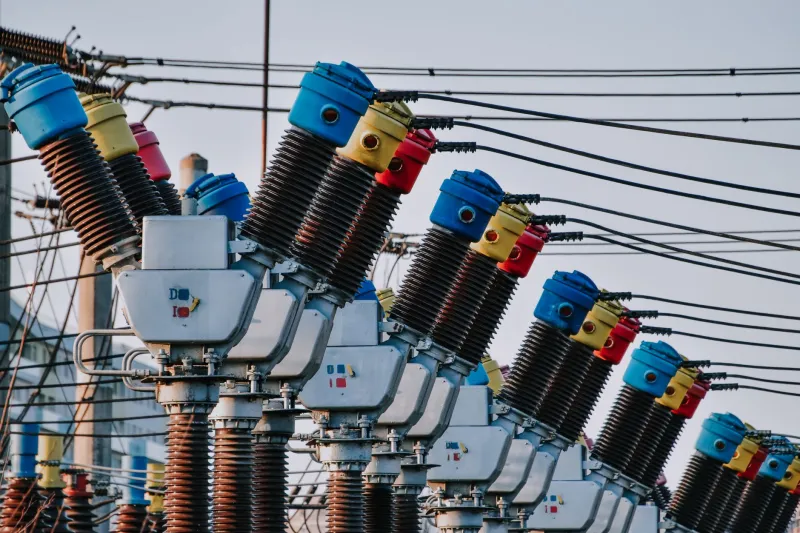
Large loads do not just connect to a distribution feeder. They often trigger network upgrades, new substations, and regional transmission projects. How those costs are allocated matters as much as the energy rate. Direct assignment charges the triggering customer. Rolled-in allocation spreads the cost across all users of the transmission system.
There is a legitimate case for each. A line built solely to serve one campus should generally be direct-assigned. A network upgrade that also relieves congestion for existing customers may deserve broader allocation. The difficulty is that utilities and developers have an incentive to describe projects as shared benefits, while consumer advocates have an incentive to describe them as private costs. Regulators must draw the line with imperfect information.
In organized markets, the capacity and energy effects add another layer. A large load can support new generation if it signs long-term contracts, but it can also tighten reserve margins and raise prices in the near term. In energy-only markets such as ERCOT, large loads may bring their own generation or demand response, but transmission costs still tend to be socialized. The result is that two states with similar data center growth can produce very different household bill outcomes.
State Approaches Diverge
Regulators in several states have opened or advanced proceedings on large-load tariffs, and the approaches are not uniform. Virginia, home to the densest data center cluster in the country, has been pressing for stronger evidence that new campuses cover the network costs they create. Georgia's commission has been developing large-load rules amid concerns about residential cross-subsidies. Ohio has examined data center tariffs and grid cost allocation. Texas relies more heavily on its competitive market and interconnection process, with transmission costs spread across the ERCOT system.
These differences are not merely technical. They reflect different views of economic development, different utility structures, and different levels of political attention. A state that attracts a campus with a favorable tariff may capture tax revenue and jobs, but it may also accept a greater share of stranded-cost risk. A state that demands strict direct assignment may deter a project, but it protects existing customers from an uncertain bet.
What to Watch in 2026
Three questions will shape the next round of decisions. First, will tariffs charge large loads for reserved capacity, not just delivered energy? Second, will transmission upgrades be directly assigned when they are clearly triggered by a single customer? Third, will exit fees and collateral requirements be strong enough to compensate remaining ratepayers if a project leaves?
There is also a transparency question. Households and small businesses rarely intervene in utility rate cases, yet they ultimately bear the residual costs. Commissions that require clear cost-causation studies and public reporting on large-load contracts will make it easier to see whether the data center boom is paying its way.
The growth of data centers is not inherently a problem for electricity delivery. It can spread fixed costs, support new generation, and improve grid utilization. But the bill depends on the rules. In 2026, those rules are being written in tariff dockets and commission orders, and the outcome will determine whether the megawatt next door is a source of shared benefit or a stranded cost.