When the Lights Go Out, the Bill Doesn't: Who Actually Absorbs the Cost of a Blackout
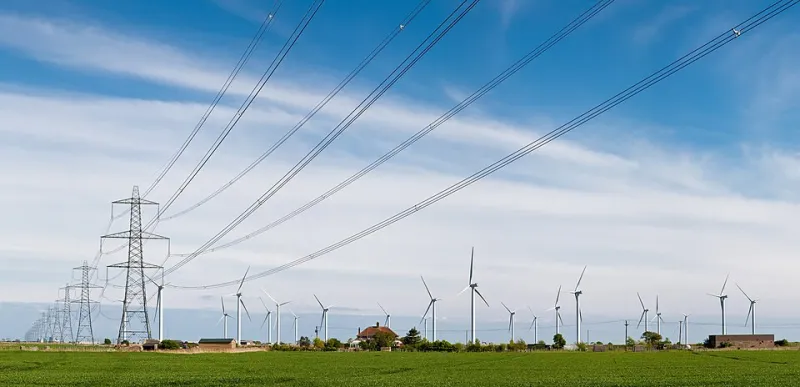
Photo: Jordan, Jonas, Public domain, via Wikimedia Commons
When a major storm knocks out power across a metropolitan area, the visible damage is downed lines and darkened storefronts. The less visible damage is financial, and it is distributed in ways that rarely match public assumptions about who bears the risk.
The conventional narrative holds that utilities pay for outages. In practice, their direct exposure is often the smallest piece of the puzzle.
What a Blackout Actually Costs, and Who Writes the Check
Economists who study interruption costs generally converge on a striking figure: the overwhelming majority of outage-related losses in the United States are absorbed by customers, not the utilities serving them. The Department of Energy and the President's Council of Economic Advisers estimated years ago that weather-related outages alone cost the American economy tens of billions of dollars annually, and the bulk of that lands on commercial and industrial customers whose operations stall when the current stops.
Utilities, meanwhile, face a narrower set of exposures. Restoration crews, pole replacements, and transformer repairs come out of operating budgets, and in some jurisdictions performance-based penalties apply when reliability metrics slip. But most state regulatory frameworks do not require automatic compensation to customers for lost perishables, missed work, or shuttered operations. Absent proven negligence, the utility's liability typically ends at restoring service.
Insurers occupy a middle ground. Commercial interruption policies and homeowners' coverage for spoiled food or temporary lodging shift some costs into the insurance system, but deductibles, exclusions, and sub-limits mean much of the loss remains uninsured. For households, an outage is usually an out-of-pocket event.
Why Recovery Speed Varies So Dramatically by State
Two communities hit by comparable storms can experience wildly different restoration timelines, and the divergence is rarely accidental.
Undergrounding matters. States that have invested in burying distribution lines — often at costs several times higher than overhead construction per mile — see materially fewer weather-driven outages. Texas, Florida, and parts of the Carolinas have pursued aggressive undergrounding and hardening programs after catastrophic hurricane seasons; utilities in states with older overhead networks and thinner capital budgets move more slowly.
Regulatory design matters just as much. In states where commissions allow utilities to earn returns on reliability investments, grid hardening proceeds. Where rate cases stall or regulators resist bill increases, deferred maintenance accumulates. Deregulated retail markets add another wrinkle: the company that sells you electricity has no control over the wires, so competitive pressure on price does nothing for reliability. That responsibility sits with the transmission and distribution utility regardless of who bills you.
Backup Power as a New Reliability Divide
Here is where the economics get uncomfortable. As outage frequency climbs — driven by aging infrastructure, vegetation stress, and extreme weather — the households and businesses that can afford redundancy are effectively purchasing a private reliability product that their neighbors cannot access.
A standby generator installation routinely runs five figures. Home battery systems, even with the federal residential clean energy credit, remain a premium purchase. The result is a two-tier system: one class of customers experiences an outage as an inconvenience managed by a humming backup system, while another loses a refrigerator of food, misses shift work, or faces medical equipment risks without recourse.
Commercial customers have long understood this arithmetic. Data centers, hospitals, and supermarkets treat backup generation as a baseline operating cost. The residential market is now following, but along income lines rather than need lines.
What Regulators Are Doing — and What They're Avoiding
A handful of state commissions have begun experimenting with outage compensation frameworks, including baseline credits for extended interruptions and stricter reliability reporting requirements. California's wildfire-related liability reforms and several Northeast states' push for performance-based ratemaking represent the more ambitious end of the spectrum.
Most commissions, however, have stopped short of mandating customer compensation, citing rate impacts and the difficulty of attributing outage causes. The political calculus is straightforward: making utilities internalize interruption costs would raise bills for everyone, including the customers least able to absorb them. Whether that trade-off is worth making is a genuinely open policy question — and one this forum will continue tracking as outage data accumulates.
The honest takeaway for consumers is this: your electricity contract says nothing about what happens when the grid fails. Reliability is a function of the wires, the weather, and increasingly, your own wallet.