Two Bills, Two Companies: Untangling Who Actually Runs Your Power
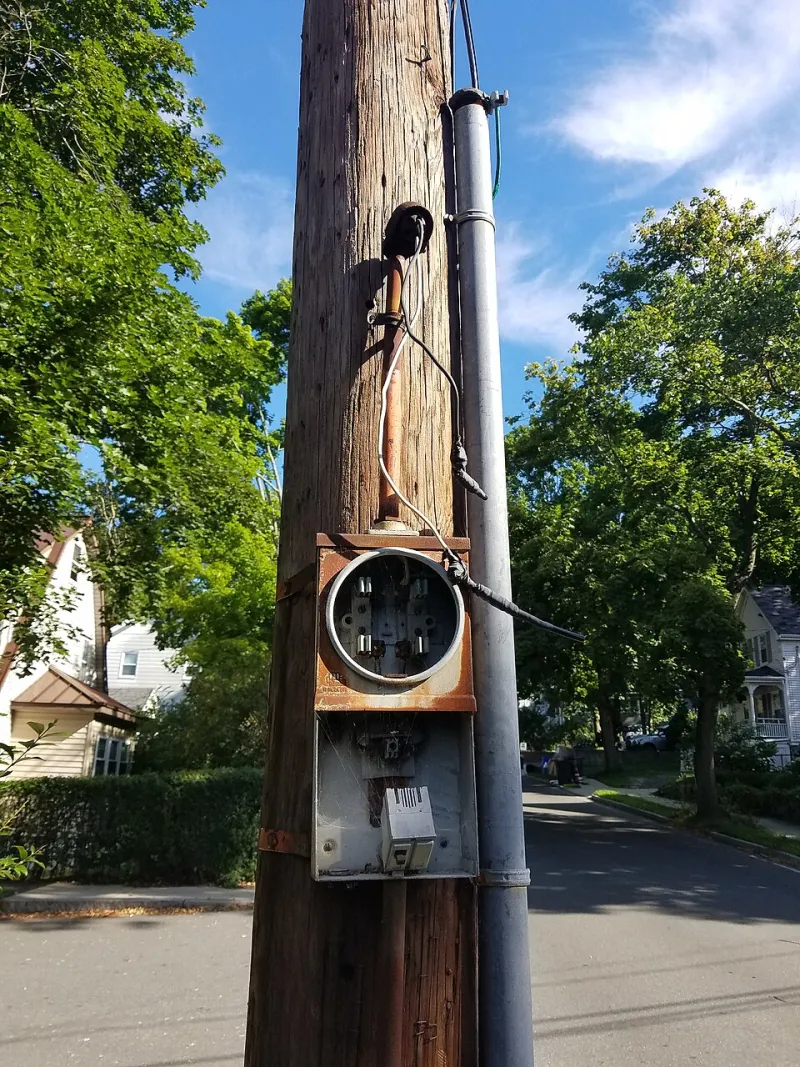
Photo: Daderot, CC0, via Wikimedia Commons
If you live in Houston and your power goes out during a summer storm, calling your retail electricity provider will get you nowhere. That's not a customer service failure — it's the architecture of deregulation working exactly as designed.
In roughly a third of US states, the electricity business has been deliberately sliced into two separate functions: the production of power and the delivery of it over wires. Most consumers interact with both every month, usually without realizing they're dealing with two distinct companies that may not even be based in the same state.
The Split, Explained Simply
Think of electricity deregulation as similar to what happened with long-distance telephone service decades ago, or how airlines work today. The airport — the infrastructure — stays put. The carrier you choose is the one flying you.
Under this model:
- The supplier (sometimes called a retail electricity provider, or REP) buys or generates electricity and sells it to you. This is the company competing for your business with advertised rates, promotional plans, and sign-up bonuses.
- The utility owns the poles, transformers, and wires, and physically delivers electricity to your home regardless of which supplier you picked. Utilities remain regulated monopolies because nobody wants six competing sets of power lines running down the same street.
The electricity itself is indistinguishable — electrons from a wind farm in West Texas behave exactly like electrons from a natural gas plant. What you're choosing is the financial contract, not a different physical product flowing through your meter.
Three States, Three Flavors of the Same Idea
Texas is the most aggressive example. Roughly 75% of the state's competitive market customers can choose from dozens of retail providers, while utilities like Oncor, CenterPoint, and AEP Texas handle delivery. Texans often see one combined bill, but the generation charges and delivery charges are itemized separately — and each goes to a different company.
Pennsylvania deregulated generation in the late 1990s but retained a default service called "Price to Compare," supplied by the incumbent utility if you never shop. PPL Electric Utilities delivers power; suppliers like the ones you see advertised compete on the generation portion. If you do nothing, you're not stranded — you simply pay the utility's default rate, which fluctuates with wholesale prices.
Ohio offers a middle path. Customers can choose a competitive supplier, but many also participate in "governmental aggregation," where a city or township negotiates a group rate on residents' behalf. Delivery, meanwhile, stays with regulated utilities like AEP Ohio or FirstEnergy's operating companies. Ohio also shows the model's limits: after a 2019 bribery scandal involving House Bill 6, the state's deregulation framework came under intense scrutiny, a reminder that market structure is a policy choice, not a law of nature.
Who You Call Depends on What Went Wrong
This is where the split becomes practical rather than academic. Match your problem to the right party:
Call your utility when:
- The power is out, flickering, or partial
- A power line is down or a transformer is sparking
- Your streetlight is broken
- You're doing construction and need lines marked or moved
Utilities typically publish outage maps and 24-hour emergency numbers. In Texas, the PUC's outage tracker and the utility's own map are the fastest routes to restoration estimates.
Call your supplier when:
- You have a question about your rate, plan, or contract terms
- Your bill's generation charges look wrong
- You want to switch providers or renew
- You're being charged an early termination fee you dispute
Reading the Bill Like an Insider
Deregulated markets produce longer, denser bills than regulated ones, but the structure is consistent. Look for three blocks:
- Delivery/distribution charges — set by the state regulator, identical no matter who supplies you. These often include a fixed monthly customer charge plus a per-kilowatt-hour transmission component.
- Generation/supply charges — this is the competitive piece, priced per kilowatt-hour, where your chosen supplier earns its margin.
- Taxes and fees — a mix of state, local, and franchise costs.
A common consumer mistake: comparing a promotional supplier rate against a utility bill's total rate rather than just its generation portion. That comparison flatters the supplier unfairly and leads to regret when the promotional period ends.
What Deregulation Does and Doesn't Change
Choosing a supplier does not affect reliability. Wires maintenance, storm response, and grid investment remain the utility's job under regulatory oversight. Nor does it change meter readings — in most territories, the utility still reads the meter even though your supplier bills you.
What it does change is price exposure and plan complexity. Fixed-rate contracts, variable-rate plans, time-of-use offerings, and renewable-content options all exist because competition rewards product variety. That variety cuts both ways: consumers who shop carefully can beat default rates; consumers who sign and forget can end up paying more than their neighbors who never chose at all.
The bottom line is simple to state and easy to forget in the moment: the company that answers your outage call is not the company that sets your rate. Knowing which is which is the first step toward actually benefiting from a competitive market.