Renting a Rooftop You Don't Have: The Practical Buyer's Guide to Community Solar
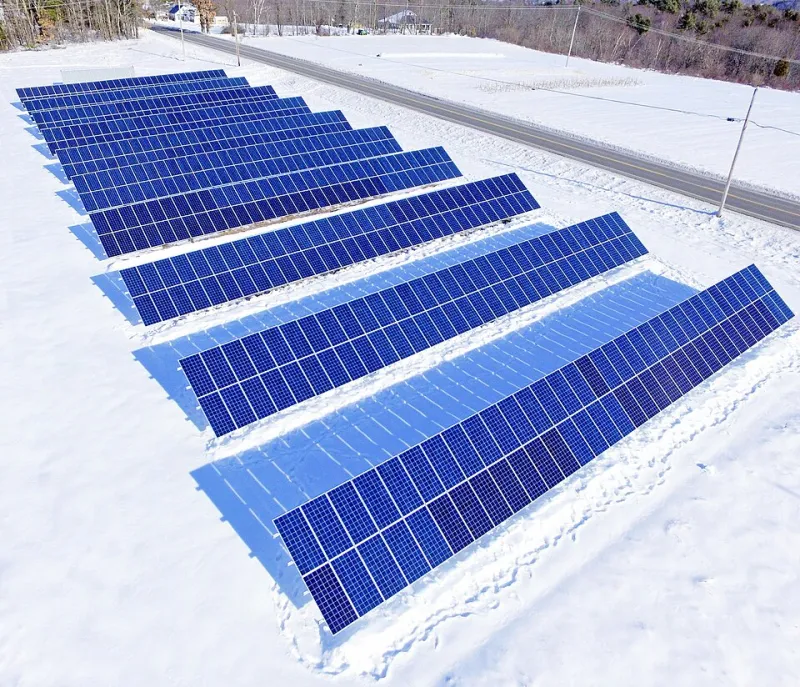
Photo: Photo by William Byers. – U.S. Department of Energy from United States, Public domain, via Wikimedia Commons
For most of the rooftop solar era, the deal was simple: own a sunny roof, or sit the market out. Community solar changes that equation. Instead of panels on your house, you subscribe to a share of a large solar farm — often a few miles away — and receive credits on your utility bill representing your portion of what it produces. Renters, condo dwellers, and homeowners with mature shade trees can all participate.
It is, on paper, one of the more consumer-friendly innovations in electricity retail. The practical question is whether the numbers hold up in the states where it operates.
How the Credit Math Works
In most programs, your share of the solar farm generates bill credits based on the electricity it produces each month. Those credits are applied to your utility bill, reducing what you owe the utility. In exchange, you pay the community solar company a subscription fee — and this is where the economics live.
The dominant model is the discount rate: you pay, say, 85 to 90 percent of the value of the credits you receive. If your share earns $100 in credits, you might pay $87 to the solar company and keep the $13 difference. Some projects offer a flat cents-per-kilowatt-hour discount; a smaller number use fixed monthly fees, which are riskier for subscribers with variable usage.
The savings are real but modest — typically 5 to 15 percent on the supply portion of a bill. Anyone promising more should be treated with skepticism.
Where the Programs Actually Exist
Community solar is a policy creation, not a national market. It flourishes where state legislatures have authorized it and utilities have implemented enabling programs. The strongest markets include:
- New York, the largest in the country by installed capacity, with a robust subscriber base downstate and across Long Island
- Massachusetts, with its SMART program and strong low-income provisions
- Minnesota, an early pioneer with a mature project pipeline
- Illinois, expanding rapidly under the Illinois Shines and community solar frameworks
- Colorado, New Jersey, Maine, and Maryland, each with functioning but smaller programs
If your state isn't on a list like this, the offers you see online may be lead-generation sites rather than real projects. Verify that a specific farm exists, has interconnection approval, and is accepting subscribers in your utility territory.
The Risks Nobody Puts in the Brochure
Community solar subscriptions are multi-year commitments — often with cancellation penalties — attached to a project you don't control. Three failure modes deserve attention.
Underperformance. If the farm produces less than projected, your credits shrink. In a percentage-discount model your savings shrink proportionally, but your obligation to the subscription may not.
Project failure or transfer. Solar companies have gone bankrupt, and projects have been sold to new owners who changed terms. Read the assignment clause: what happens to your subscription if the developer sells?
Moving. Most contracts allow you to cancel without penalty if you move out of the utility territory, but you'll need documentation. If you move within the same service area, you may need to find a replacement subscriber or pay an exit fee.
There's also a subtler trap: double-dipping on green claims. If you subscribe to community solar and also buy a renewable electricity plan from a competitive supplier, you may be paying twice for the same environmental attributes. Pick one.
Community Solar vs. a Green Retail Plan
The comparison comes down to what you're buying. A traditional green plan from a competitive supplier delivers renewable-backed supply at a known rate — simple, portable, and priced into one number. Community solar delivers actual bill credits from a physical project near you, usually at a net discount, but with more moving parts.
A reasonable rule of thumb: if you want simplicity and price certainty, a fixed-rate green plan is easier. If you want measurable savings and are comfortable reading a contract, a well-vetted community solar subscription in a strong state market is likely the better financial deal — and the one that puts electrons, not just certificates, on your local grid.
Before signing anything, ask for the project's name and location, the exact discount formula, the cancellation terms, and whether the credits appear on your utility bill or a separate statement. Reputable operators answer all four without hesitation. The ones that don't have told you something worth knowing.